El Niño 2026: Rumors vs. The Scientific Reality

FactSeeker Alert: The developing 2026 El Niño is a slow, global ocean shift—not an immediate storm. Rely on scientific data, not social media panic.
by Anonymous |
May 24, 2026
Sensational headlines, panicked “Super El Niño” warnings, and doomsday predictions regarding changing weather patterns have recently flooded social media platforms and YouTube channels. While it is true that our global climate is undergoing significant changes, separating scientific facts from hyperbole and fake news is absolutely critical.
Based on official data from international meteorological organizations, FactSeeker brings you the verified truth behind the unfolding climate situation.
Clarification on Climate Change
To understand current weather anomalies, we must distinguish between two completely different concepts:
-
Climate Change (Long-term Impact): This refers to the systemic, decades-long rise in Earth’s average temperatures, primarily driven by human activities like burning fossil fuels and deforestation.
-
Climate Variability (Short-term Cycle): This is a naturally occurring weather cycle that lasts for a few months or years. El Niño is not caused by climate change; it is a natural cycle. However, human-induced global warming acts as an amplifier, making the impacts of El Niño more severe, intense, and unpredictable than in the past.
What is El Niño? (The ENSO Cycle Explained)
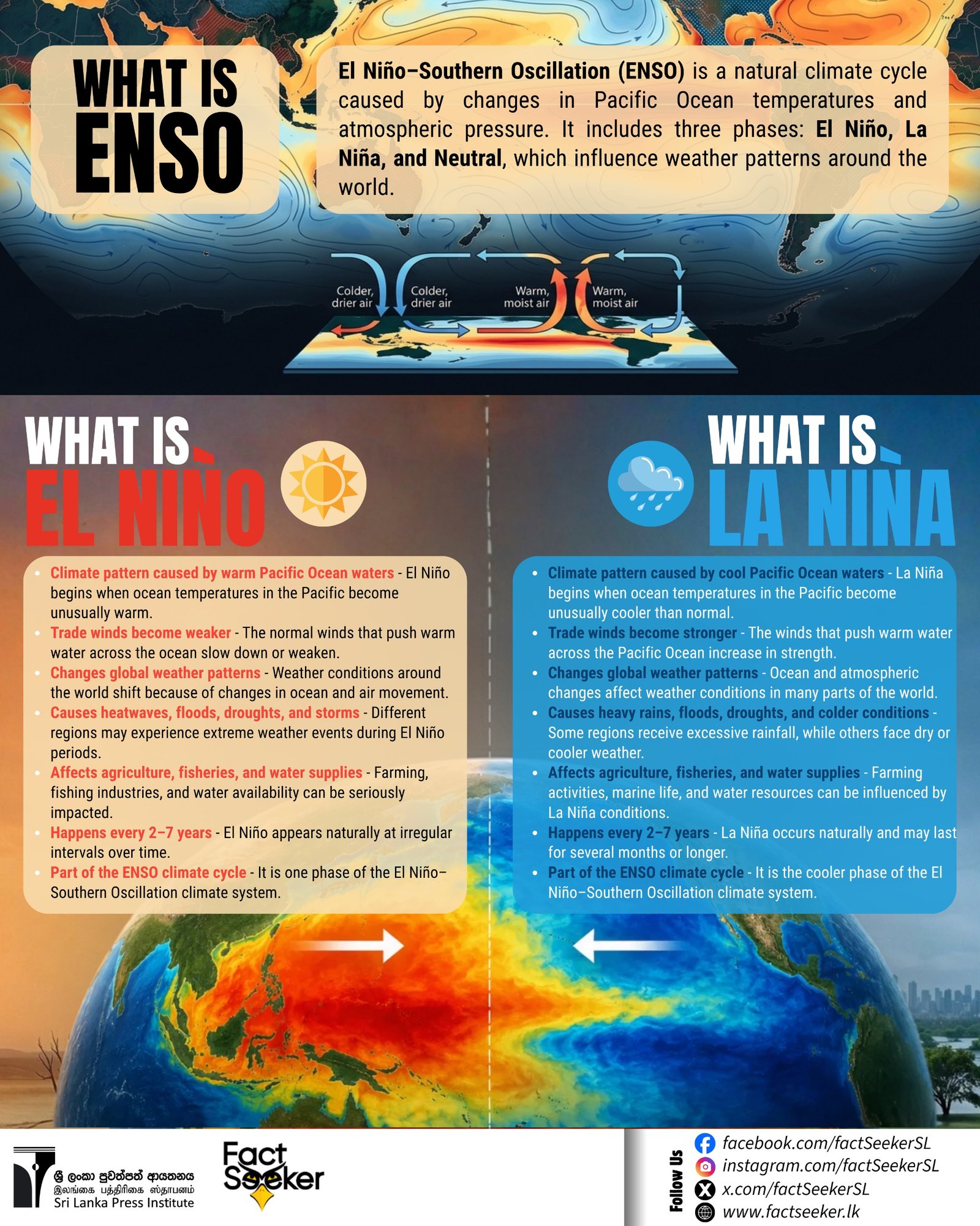
The El Niño-Southern Oscillation (ENSO) is a natural climate pattern centered in the tropical Pacific Ocean that alters global weather. It moves through three distinct phases:
La Niña (The Cooling Phase): During this phase, the sea surface temperatures in the central and eastern Pacific Ocean become much cooler than normal. This change strengthens the tropical trade winds, which push warm surface waters toward Asia and Australia, bringing them heavy monsoon rains while leaving the Americas uncharacteristically dry.
ENSO-Neutral (The Balanced Phase): This is the transitional period where the ocean and the atmosphere are in perfect balance. Ocean temperatures, underwater currents, and wind speeds stay very close to their long-term historical averages, allowing standard, predictable seasonal weather patterns to take place globally without major climate disruptions.
El Niño (The Warming Phase): In this phase, the tropical trade winds weaken or completely reverse direction, allowing a massive pool of warm water to slosh backward toward South America. This shifts the global jet stream, pulling rain clouds completely away from South Asia and Australia—triggering severe droughts—while unleashing heavy rainfall and flash floods across the Americas.
Historical Data: Past El Niño Events and Their Impacts
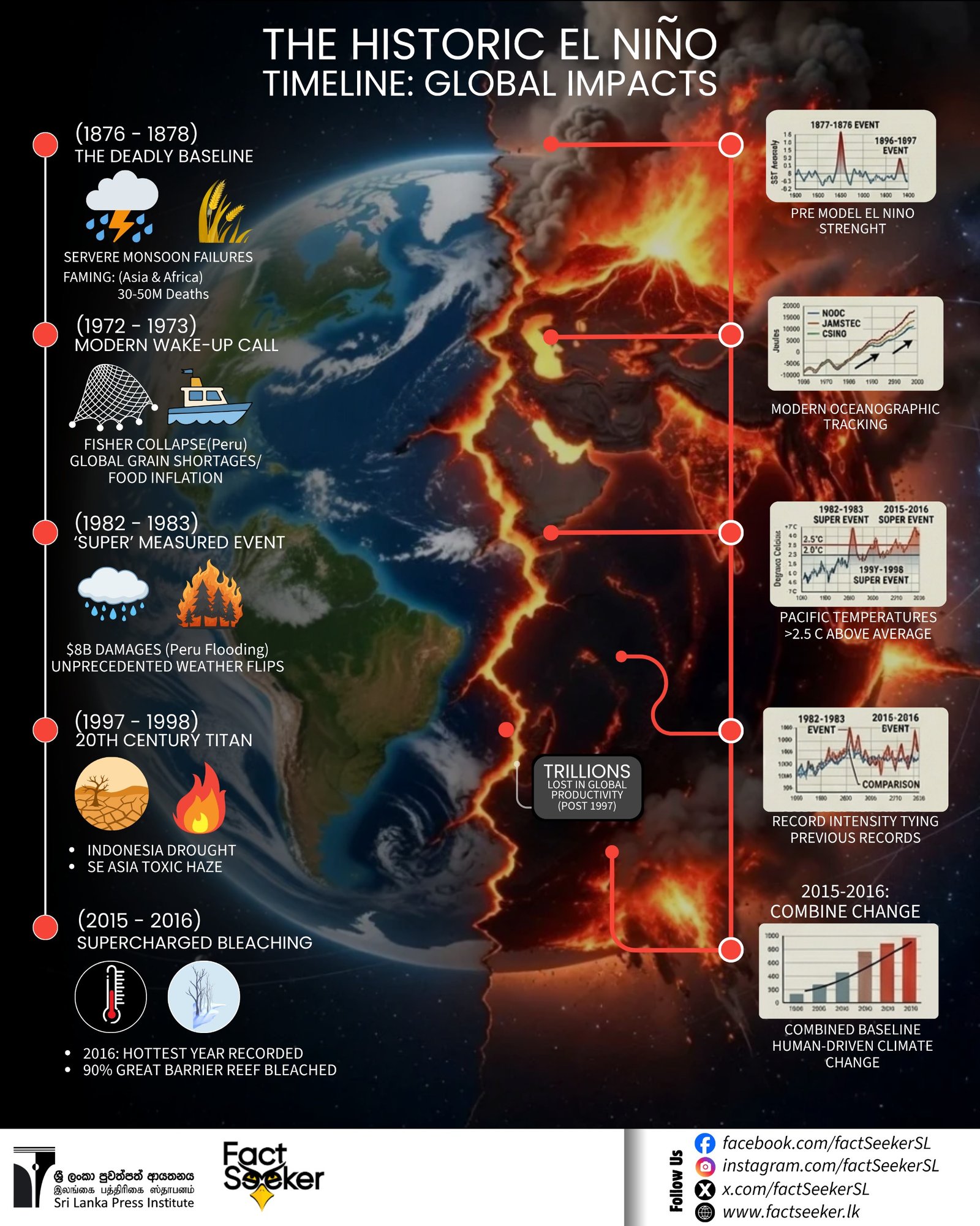
El Niño events occur naturally every 2 to 7 years. Historically, the most severe “Super El Niño” events—where ocean temperatures spiked 2^C above average—have caused major global disruptions:
-
1876–1878: One of the worst pre-modern El Niños on record. It triggered multi-year monsoon failures across India, China, and parts of Africa, resulting in historic agricultural collapse and widespread famine.
-
1997–1998: This “20th-Century Titan” caused severe droughts in Malaysia, Indonesia, and Australia, fueling catastrophic forest fires. Simultaneously, it unleashed historic, destructive flooding in Peru and Ecuador.
-
2015–2016: Combined with baseline global warming to make 2016 the hottest year ever recorded up to that point. It triggered a global marine crisis, cooking ocean ecosystems and bleaching over 90% of certain sections of Australia’s Great Barrier Reef.
Current Status: When Will El Niño Arrive? (2026 Data)
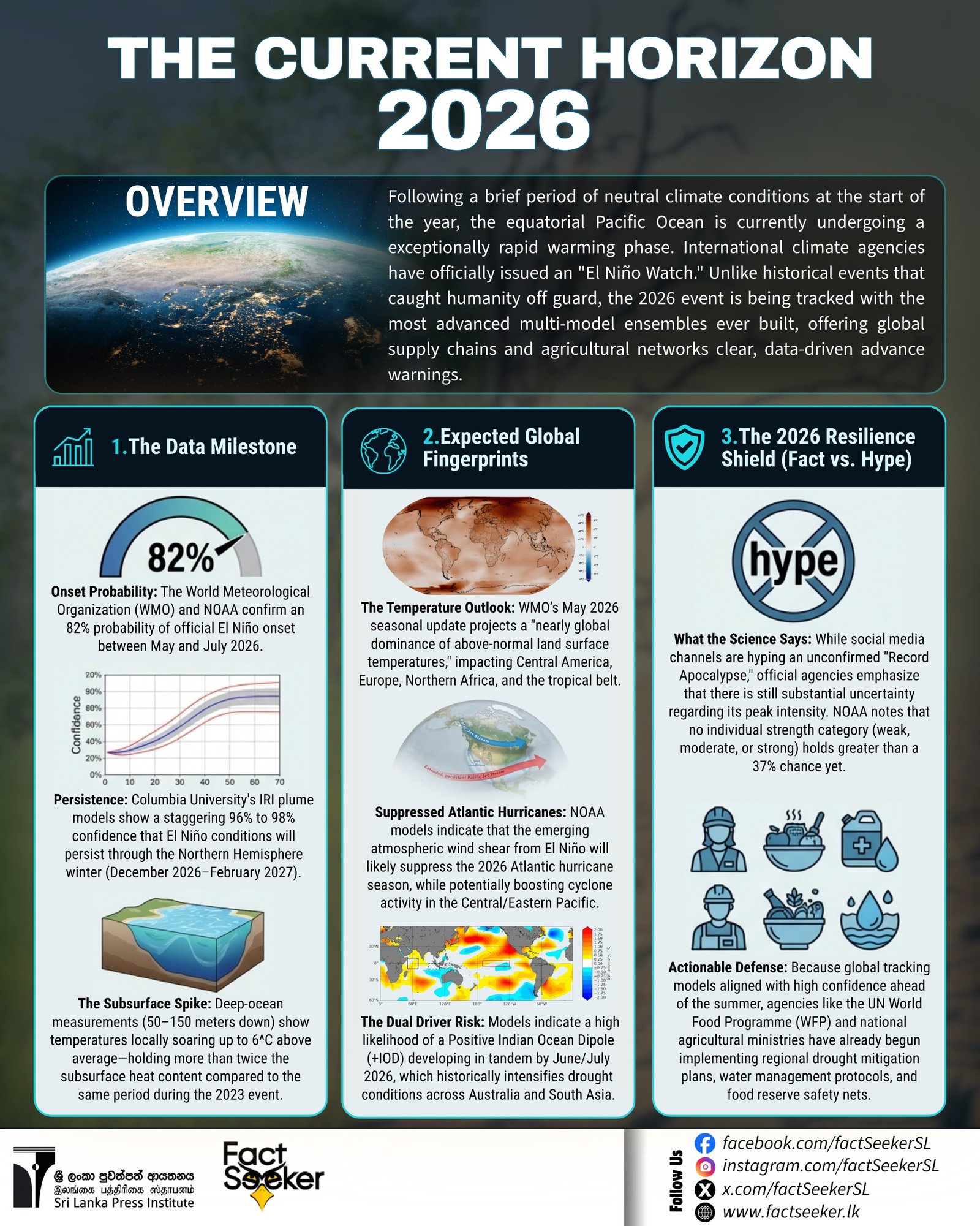
Following the end of the weak La Niña phase earlier this year, the world is currently experiencing an ENSO-neutral state. However, data from international research centers shows that the tropical Pacific Ocean is warming at an exceptionally rapid pace.
According to May 2026 updates from the World Meteorological Organization (WMO) and NOAA (National Oceanic and Atmospheric Administration):
-
The Timeline: There is an 82% probability that El Niño conditions will officially emerge between May and July 2026.
-
The Persistence: Climate models indicate a 96% to 98% chance that this El Niño will persist through the Northern Hemisphere winter (December 2026–February 2027).
-
The Intensity: Subsurface ocean temperatures are climbing rapidly, suggesting a strong event is developing. However, research centers emphasize that its exact peak intensity is still being actively studied.
Debunking Fake News: Viral Myths vs. Scientific Reality

Certain mainstream media outlets and YouTube channels are falsely claiming that El Niño is already fully active or describing it as an imminent disaster. Let’s look at the facts:
The Rumor: Certain mainstream media and YouTube channels are falsely claiming that El Niño is already fully active, that it is a dangerous storm set to hit our country next week, and that it will cause instant, universal heat and drought across all nations.
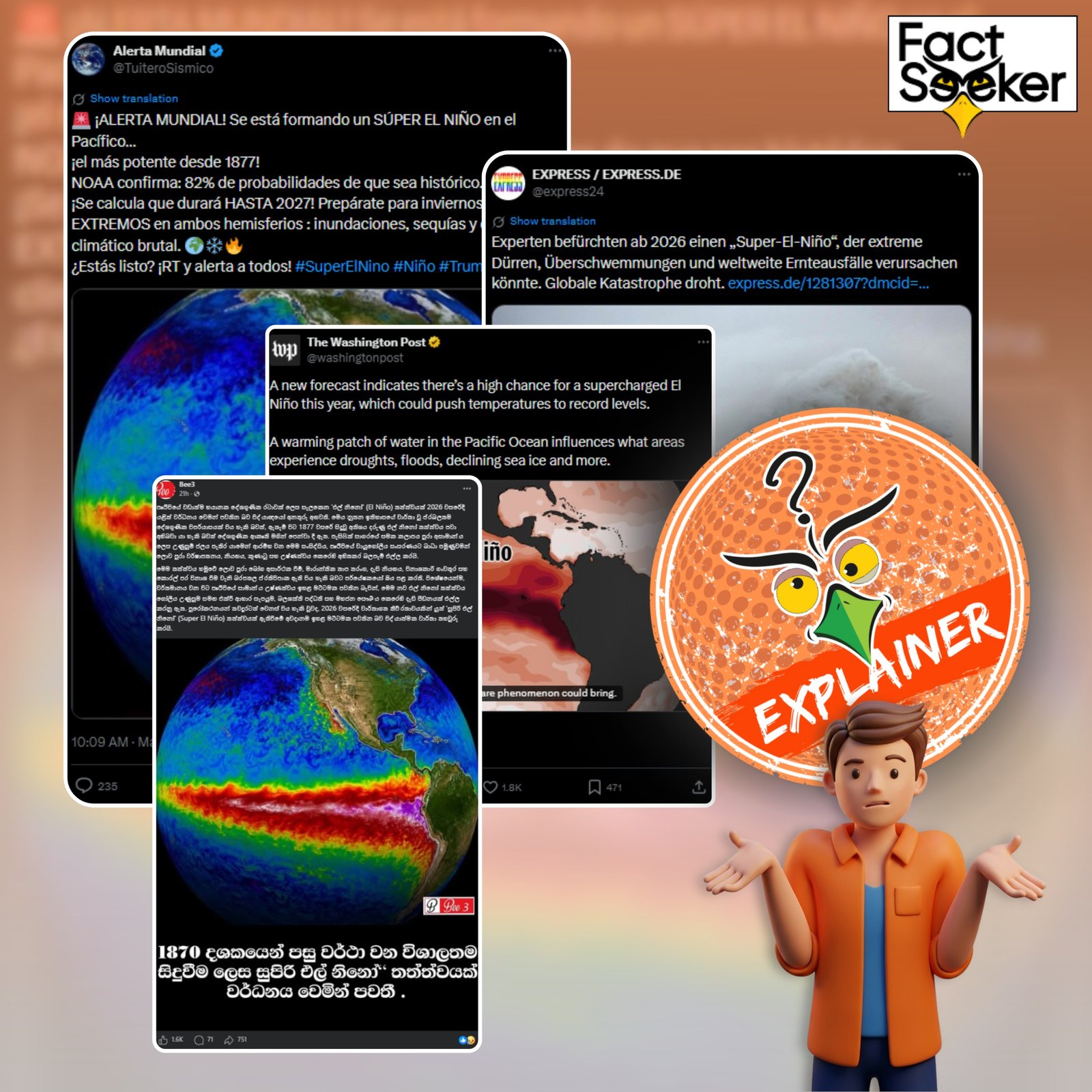
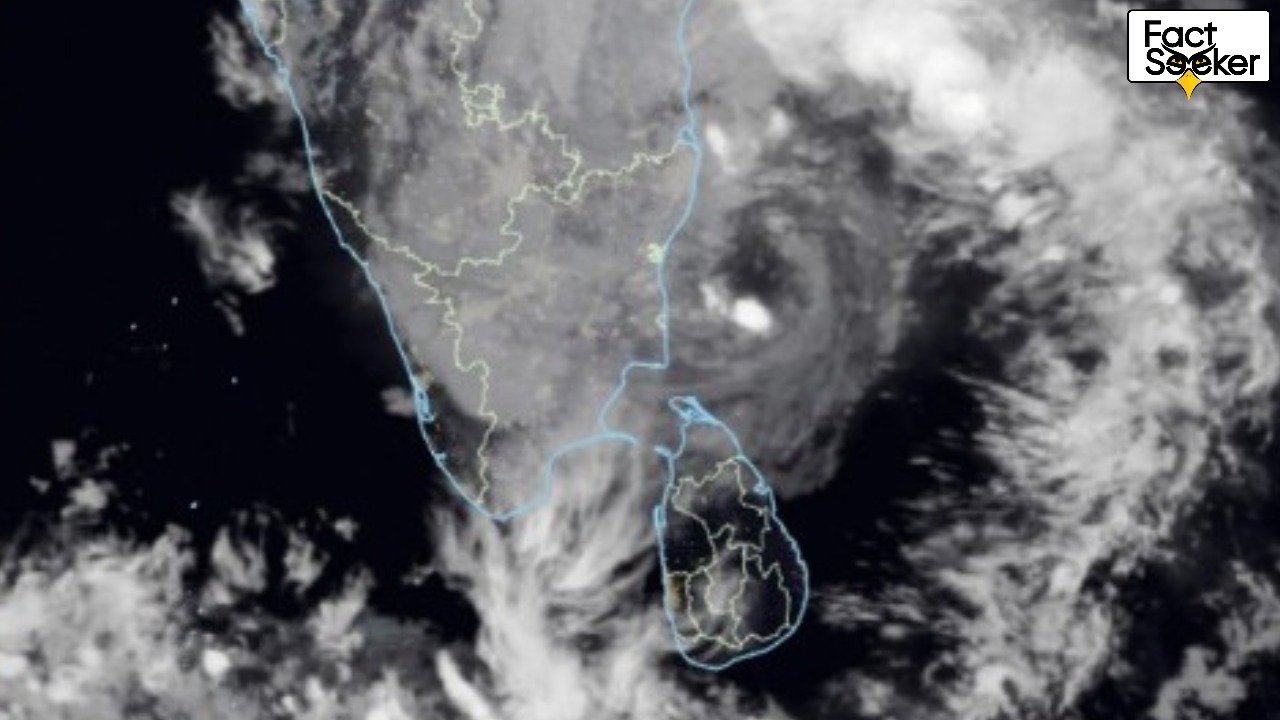
The Reality on Onset: The world is currently in an ENSO-neutral phase—El Niño has not officially arrived yet. Furthermore, El Niño is not a sudden, weekly storm or cyclone that you can track on a radar map; it is a slow-moving, large-scale ocean and atmospheric shift that lasts for several months and alters seasonal probabilities.
The Reality on Agriculture: While El Niño poses distinct challenges to crop yields, global monitoring systems in 2026 are highly advanced. Organizations like the FAO and WHO track these metrics in real-time, allowing governments to proactively adjust irrigation schedules and guide farmers toward resilient crops, making claims of total agricultural collapse entirely false.
The Reality on Regional Impact: El Niño never affects every country the same way. While it is projected to bring drier conditions and drought risks to Southeast Asia, it simultaneously triggers uncharacteristically heavy rainfall, intense storms, and coastal flooding across the opposite side of the world, such as South America and East Africa.
The FactSeeker Takeaway: Sharing sensationalized, unverified doomsday headlines under the guise of an “early warning” is highly counterproductive and misleading; the public should reject this panic-mongering and rely strictly on certified scientific data.
The Global Effects of El Niño
When a strong El Niño establishes itself, the heat released from the Pacific Ocean into the atmosphere reshapes global weather:
-
Record Temperature Spikes: Because natural El Niño heat is stacking on top of long-term climate change, late 2026 and 2027 are highly projected to break records as some of the hottest years in human history.
-
Altered Hurricane Patterns: It creates high-altitude wind shear that typically suppresses hurricane formation in the Atlantic Ocean, while boosting the intensity of cyclones in the Central and Eastern Pacific.
-
Coastal Flooding: The thermal expansion of warm water combined with sea-level rise increases the frequency of high-tide coastal flooding along the Americas.
The Outlook for South Asia (India, Sri Lanka, and Neighborhood)
South Asia’s summer monsoon dynamics are historically highly sensitive to the phases of the Pacific Ocean.
-
Weakened Monsoons: A developing El Niño increases the risk of a suppressed or highly erratic Southwest Monsoon, leading to below-average rainfall across major agricultural belts.
-
Severe Heatwaves: Pre-monsoon and summer periods are susceptible to prolonged, intense heatwaves, placing immense strain on public health and national power grids.
-
Agricultural Stress: Crops like rice, sugarcane, and corn face operational risks due to delayed or insufficient rainfall. National agencies are already advising farmers to adopt water-saving irrigation practices.
-
Erratic Winter Rain: Conversely, later in the year, parts of Southern India and Sri Lanka may experience an unseasonably heavy Northeast Monsoon, shifting the localized threat from drought to sudden flash flooding.
Conclusion
The 2026 El Niño is developing quickly and requires serious preparation from policymakers and agricultural sectors. However, panic fueled by unverified media posts is counterproductive. FactSeeker urges the public to remain vigilant, ignore sensationalized rumors, and rely strictly on official updates from verified meteorological institutions.