Viral claim that 8 died after a rock fell on a bus at the 18 Hairpin Bends is completely FAKE

A viral Facebook post claiming eight people died after a rock crushed a bus at the 18 Hairpin Bends is fake and features an AI-generated image.
by Anonymous |
June 15, 2026
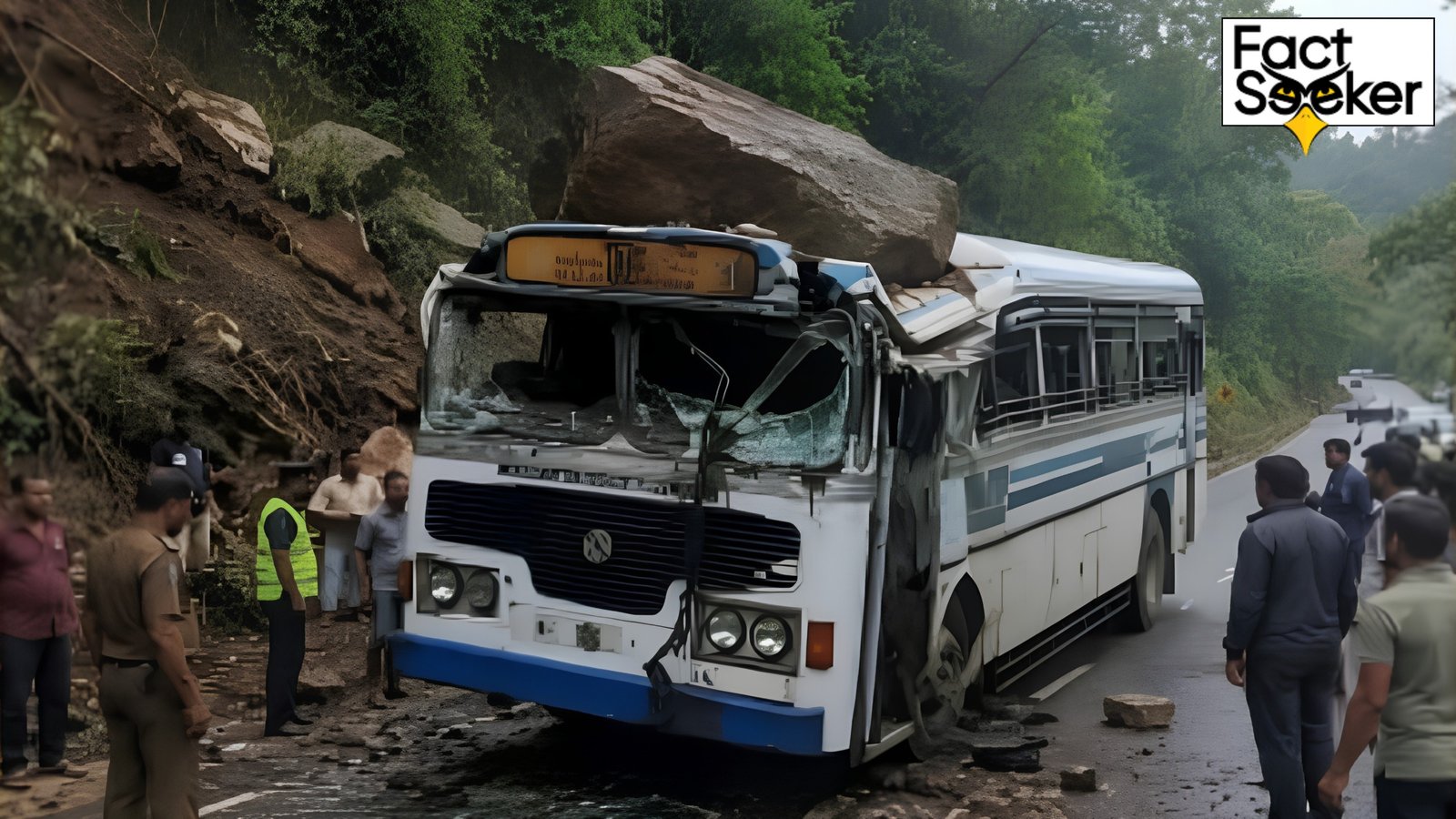
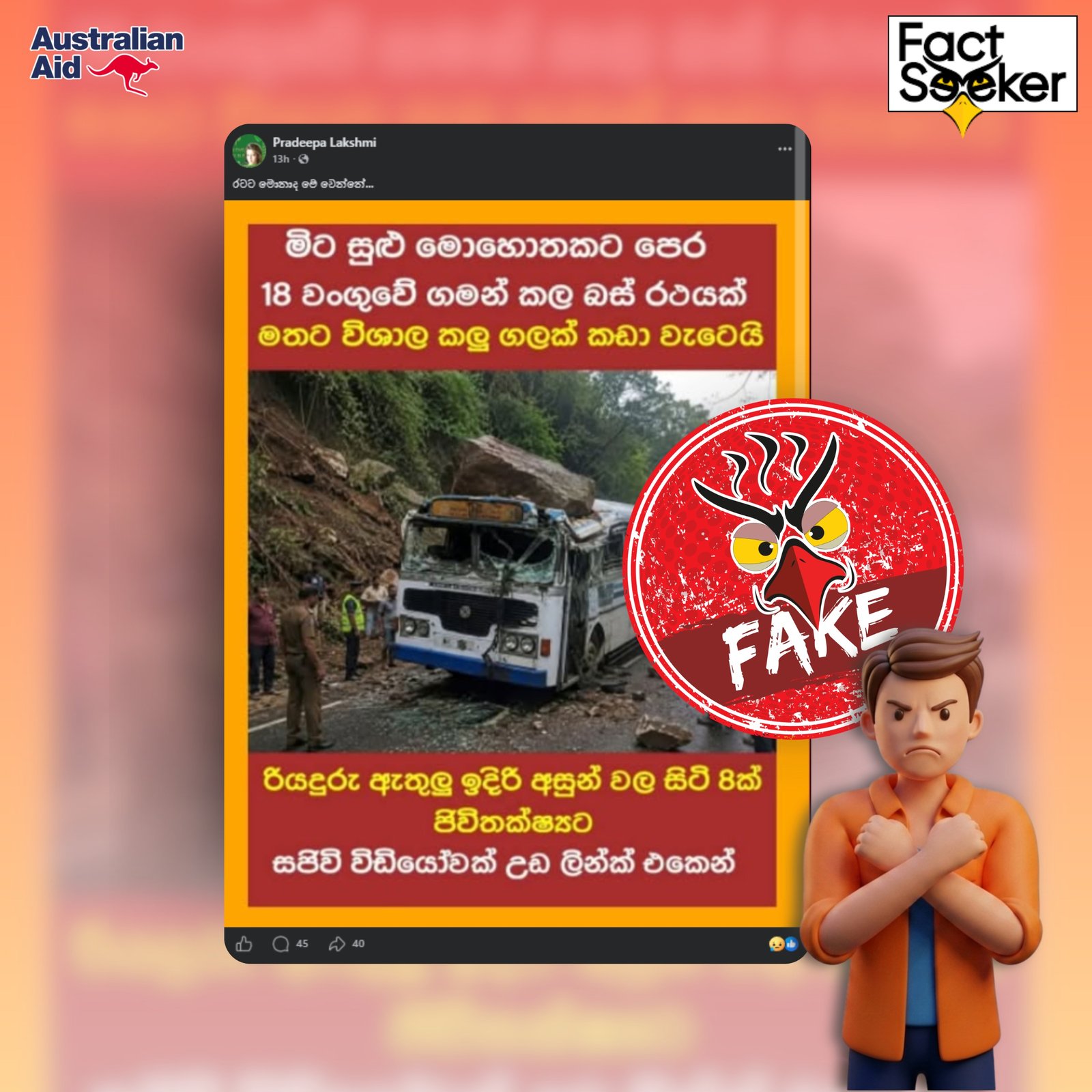
A post accompanied by a photograph is being shared on Facebook claiming that a massive rock fell onto a passenger bus traveling along the 18 Hairpin Bends on the Kandy-Mahiyangana (A26) road, killing eight people, including the bus driver. The post also urges users to click a provided link to watch the “live video” of the accident.
When FactSeeker investigated this claim, it was revealed that the image is a completely fake photograph generated using AI, and the news claiming that eight people died is entirely untruthful.
Investigation
If an incident of this magnitude had occurred, it would have been reported as breaking news across major news networks. However, no such news was published by mainstream media. Furthermore, a verification of recent reports from the Sri Lanka Police, the Road Development Authority (RDA), and leading news organizations confirmed that no such accident has been recorded.
Fact-Check Verification and Evidence
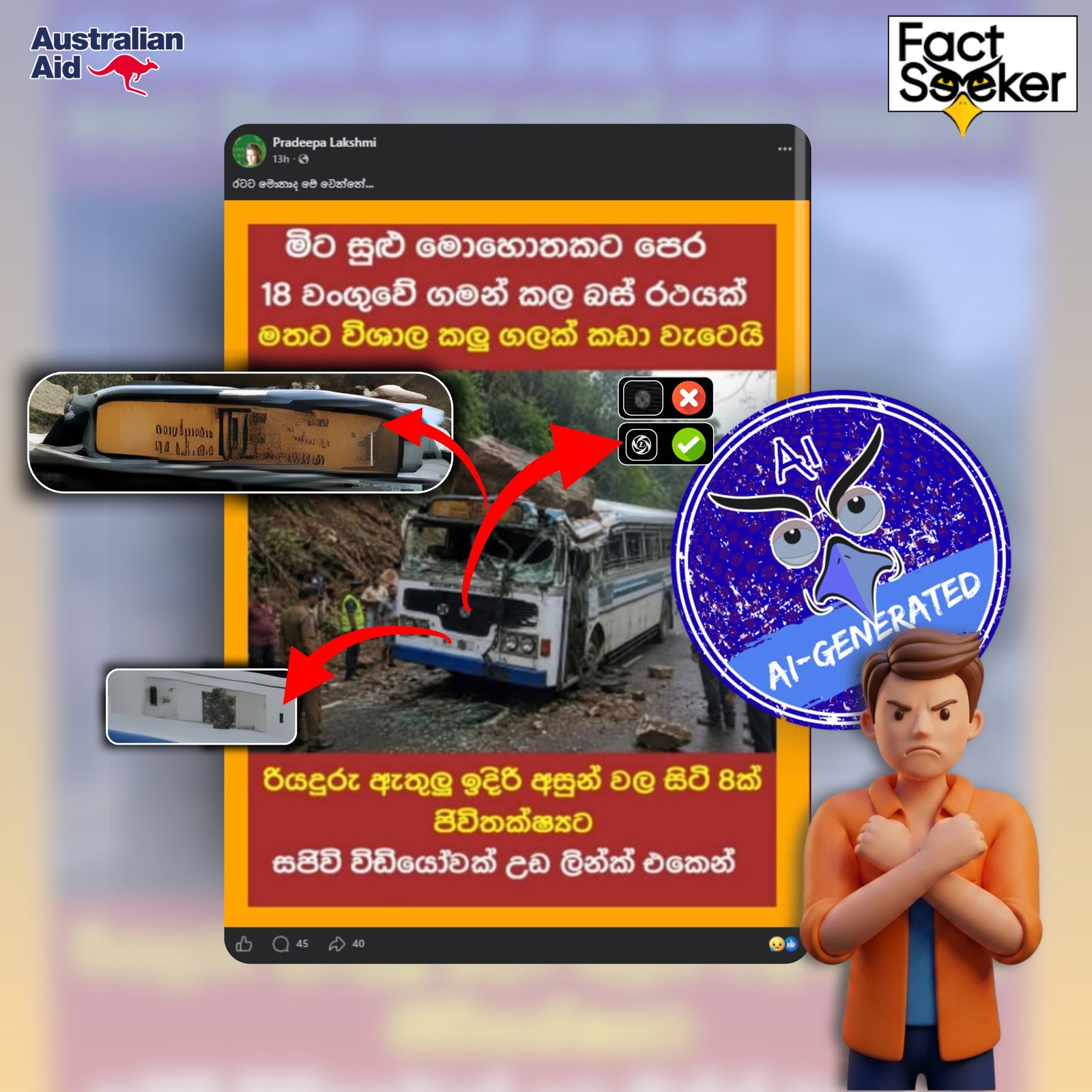
1. Digitally Manipulated Image
A close examination of the photograph clearly reveals that it was falsely created using computer technology. The number plate of the bus is fake.
2. Errors in the Destination Board or Route Board
There are noticeable distortions and errors in the text on the bus’s destination board. This clearly demonstrates that the image was generated via Artificial Intelligence (AI).
3. Ashok Leyland Logo
The bus shown in the photograph is an Ashok Leyland model. However, the Ashok Leyland logo on the bus does not match the official company design and appears distorted.
Additionally, there is a distinct lack of natural alignment between the surrounding scenery and the boulder resting on top of the bus, giving it a completely artificial appearance. These combined factors conclusively prove that the news is entirely fabricated.
The “Clickbait” Scam Trap
The true motive behind this post lies in its final sentence: “Watch the live video from the link above.” This is a typical line used in fraudulent link sharing.
This is a common tactic employed by scammers on social media. By fabricating tragic fatal accidents, they exploit public fear and curiosity for their own gain. If a user clicks the link provided to watch the “video,” they are redirected to dangerous third-party websites. This can lead to:
Phishing: Your social media account passwords could be stolen.
Malware/Spyware: Harmful viruses could automatically download onto your phone or computer.
Ad Fraud: Scammers generate illicit revenue through clicks on their website advertisements.
Conclusion
The viral story claiming that a rock fell on a bus at the 18 Hairpin Bends, killing eight people, is completely false. The photograph is a hoax, and the link attached to it is highly dangerous.
Our Rating: FALSE & SCAM
Public Advisory: Members of the public are strongly advised never to click on links contained in these types of social media posts. Furthermore, sharing such fake news must be avoided. Doing so spreads unnecessary panic and poses a severe threat to your online security as well as that of your close contacts. Always verify breaking news exclusively through official and established media channels.